
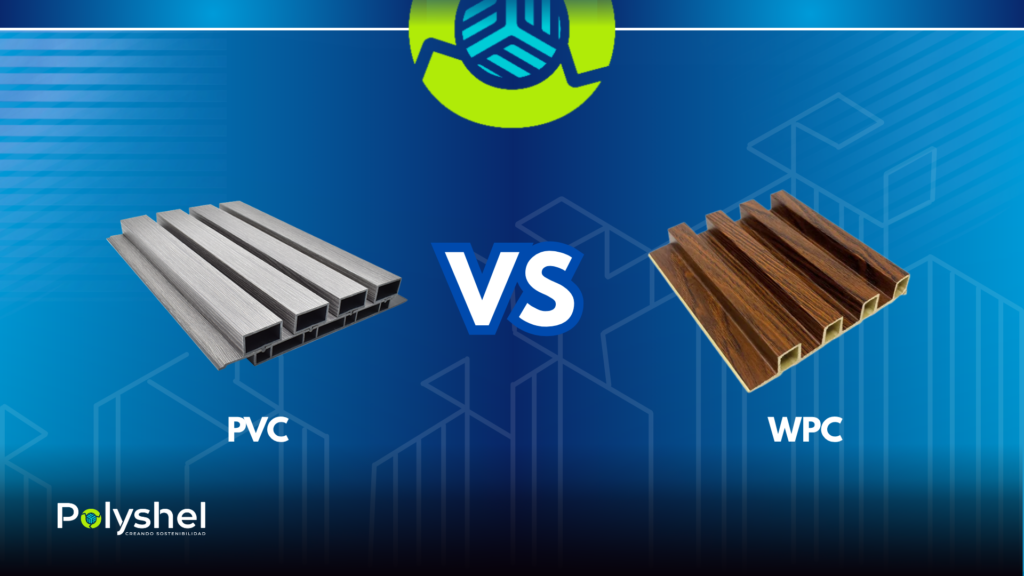
In modern construction and interior design, choosing the right material can make the difference between a long-lasting project and one that incurs high long-term maintenance costs. Two of the most popular options today are PVC and WPC, but although they are often confused, they have very different characteristics.
Whether you're about to start a project or looking to offer better solutions to your customers, here we explain the key differences between PVC and WPC.
PVC (polyvinyl chloride) is a highly durable, lightweight, and versatile plastic material. It is widely used in construction due to its durability and low-maintenance properties.
Advantages of PVC:
For brands like Polyshel, PVC has become an innovative solution for creating modern, functional, and aesthetically pleasing spaces.
WPC (Wood Plastic Composite) is a mixture of wood fibers and plastic. Its main appeal is its appearance, which resembles natural wood.
Advantages of WPC:
However, because it contains organic fibers, it may require extra care under certain conditions.
Although both materials have similar uses, there are significant differences between them:
The choice between PVC and WPC depends on the type of project and the result you're looking for.
If you need:
PVC is the best option.
If you're mainly looking for:
WPC could be an alternative.
Both PVC and WPC are innovative materials that have revolutionized modern construction. However, when it comes to strength, practicality, and durability, PVC stands out as a more efficient solution for most indoor applications.
At Polyshel, we are committed to materials that combine design, technology, and functionality to help you create modern spaces that stand the test of time.



Mexico
atencionaclientes@polyshel.com.mx
+52 427 149 2572
+52 427 226 6654
ventas@polyshel.com.mx
+52 1 55 4601 4406
USA
avalenzuela@kovam.com.ar
+1 954 608 1149
Mexico
2 Fulton Ave., Valle de Qro. neighborhood
ZIP Code 76803
San Juan del Río, Querétaro
USA
4845 E 10th Ct, Hialeah, FL 33013
POLYSHEL | Privacy Notice
© 2026 Polyshel. All rights reserved